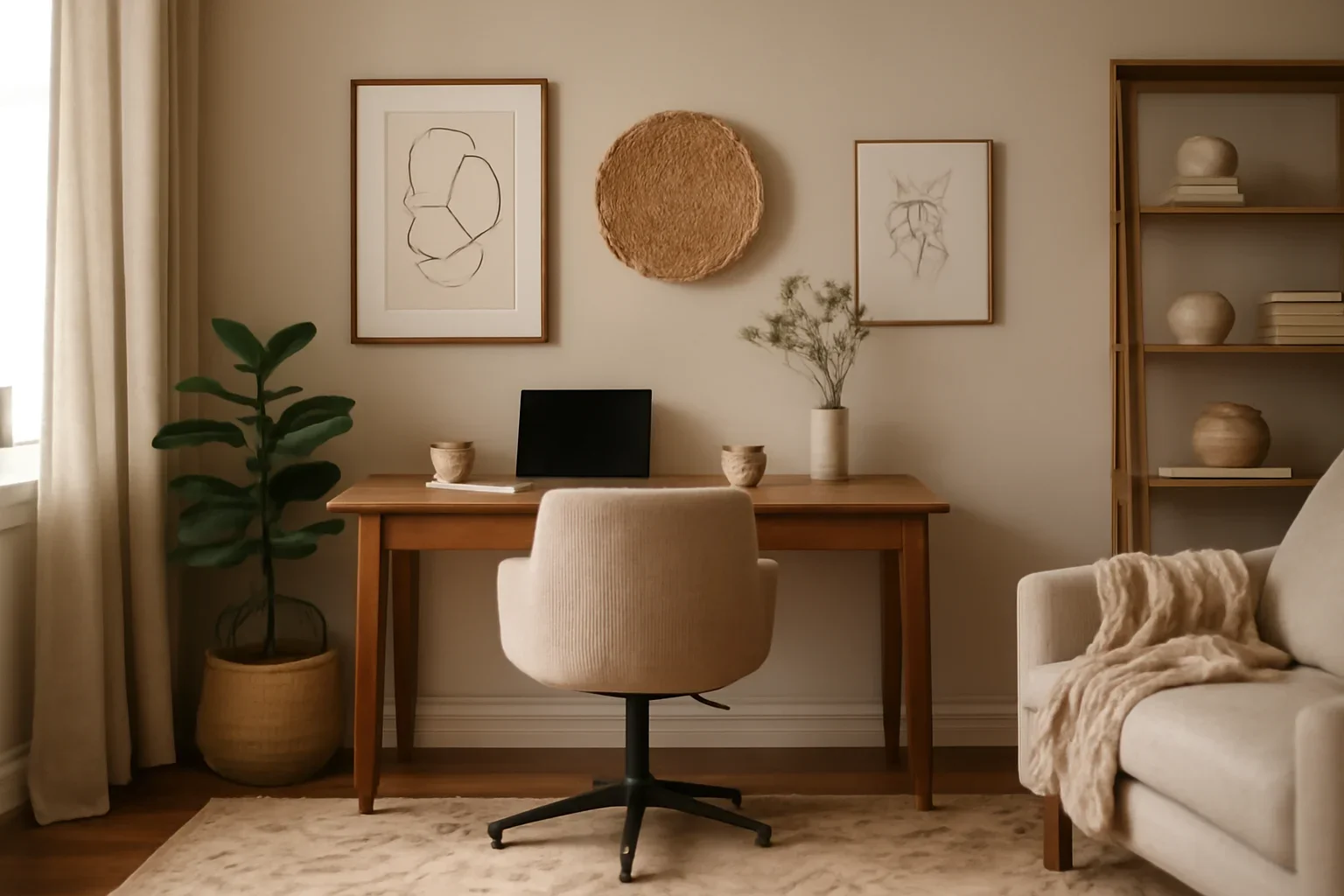
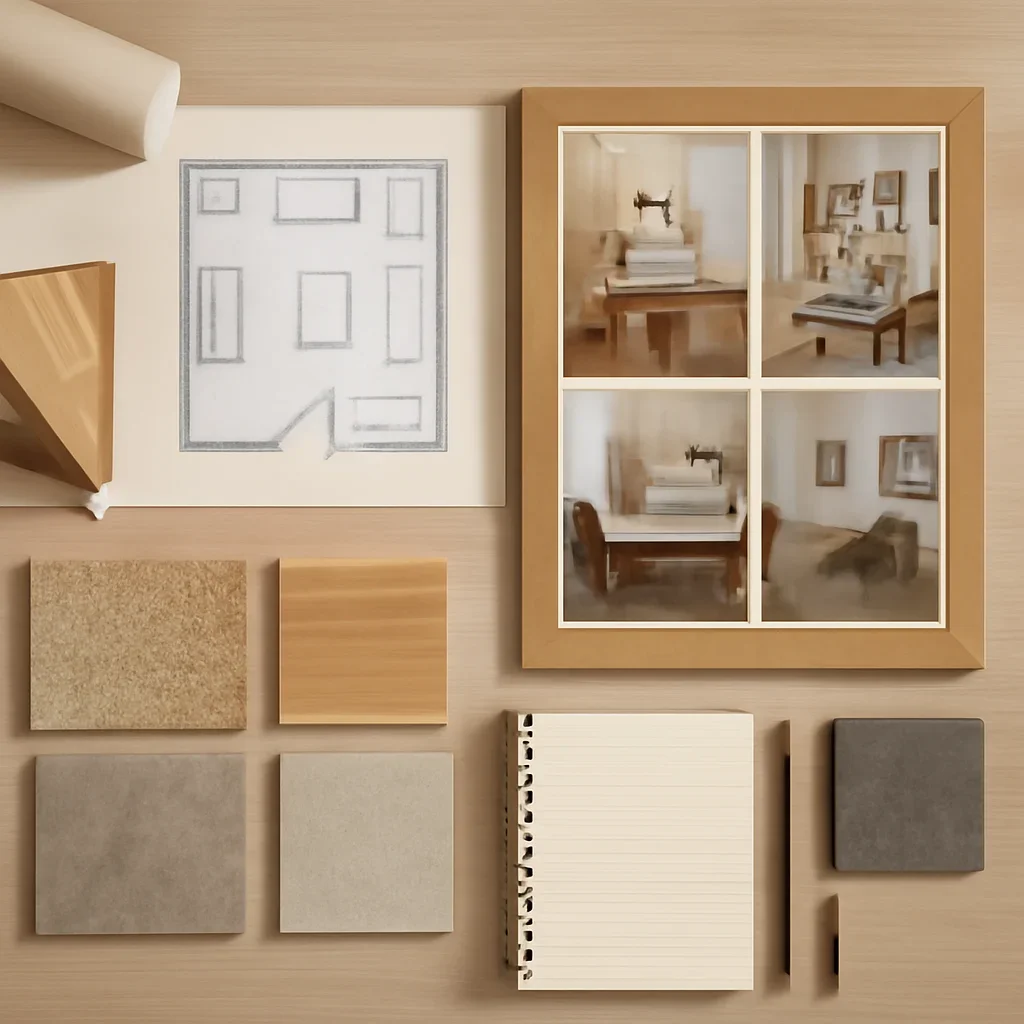
Start with the work itself
Think about how long you spend there, what equipment needs to stay accessible, and whether the room also has to support meetings, reading, or another secondary use.
- List what stays out every day and what can be stored.
- Notice where clutter builds up most often.
- Use your actual workflow to guide the plan.
Fix the layout before styling
Better furniture placement often changes the whole feel of the room faster than paint or accessories. Desk position, sightlines, and storage zones set the tone for how focused the space feels.
- Maximize daylight without creating screen glare.
- Keep high-use storage within easy reach.
- Allow enough open surface for the way you work.
Use design to support energy
Color, texture, and lighting shape how the room feels hour after hour. A successful office looks good, but it also helps you stay steady and clear-minded.
- Choose a palette that feels alert but not frantic.
- Layer task lighting with softer ambient light.
- For a more tailored plan, visit home office interior design.