Start with the room’s real focal point
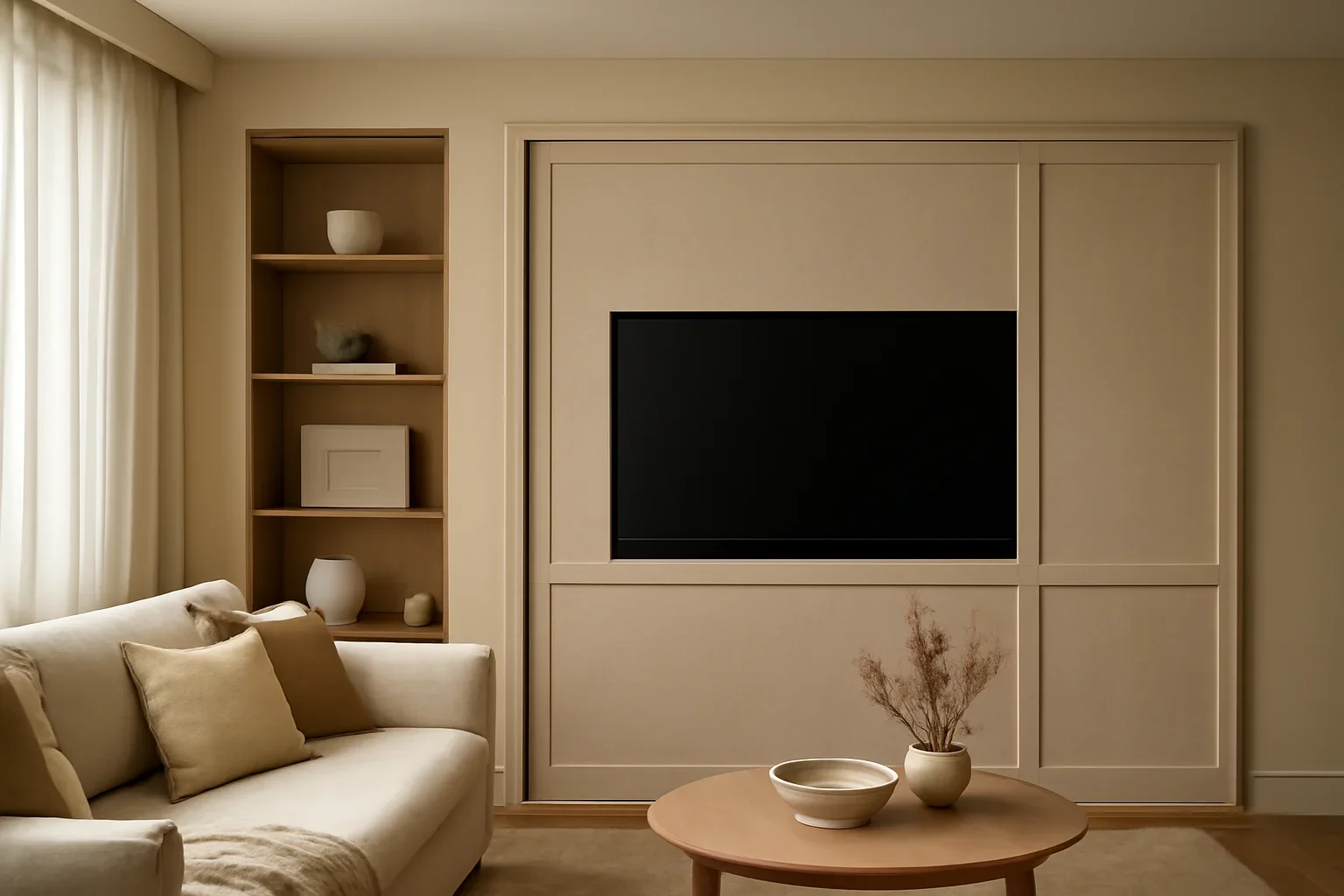
Some living rooms want the fireplace, windows, artwork, or shelving wall to lead. Others need the TV to be visible but quieter. The answer depends on how the room is actually used.
- Decide how often the TV needs to be front and center.
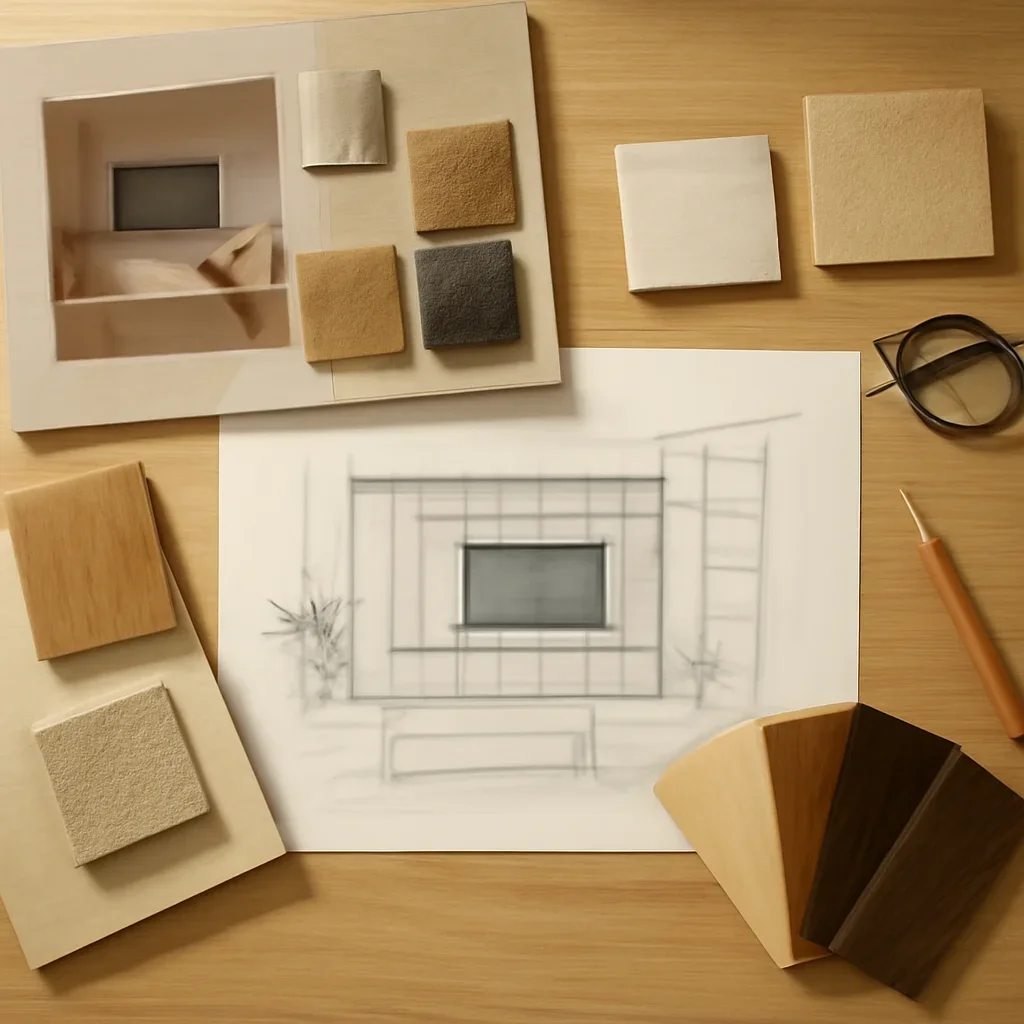
- Balance the visual weight of the screen with cabinetry, art, or millwork.
- Avoid forcing every piece of furniture to point awkwardly toward the TV.
Use concealment that fits the room
Sliding panels, cabinetry, dark wall colors, gallery walls, and strategic placement can all reduce the screen’s presence in different ways.
- Built-ins help when storage is already needed.
- A darker backdrop can minimize contrast around the screen.
- Layered styling around the TV works better when it still leaves breathing room.
Keep the room comfortable to live in
The room should still support conversation, movement, and good viewing angles when needed. Hiding the TV should not make the layout harder to use.
- Think about glare from windows and lighting.
- Leave enough surface and wiring organization to keep the setup clean.
- If the entire room needs reworking, living room design support can help.