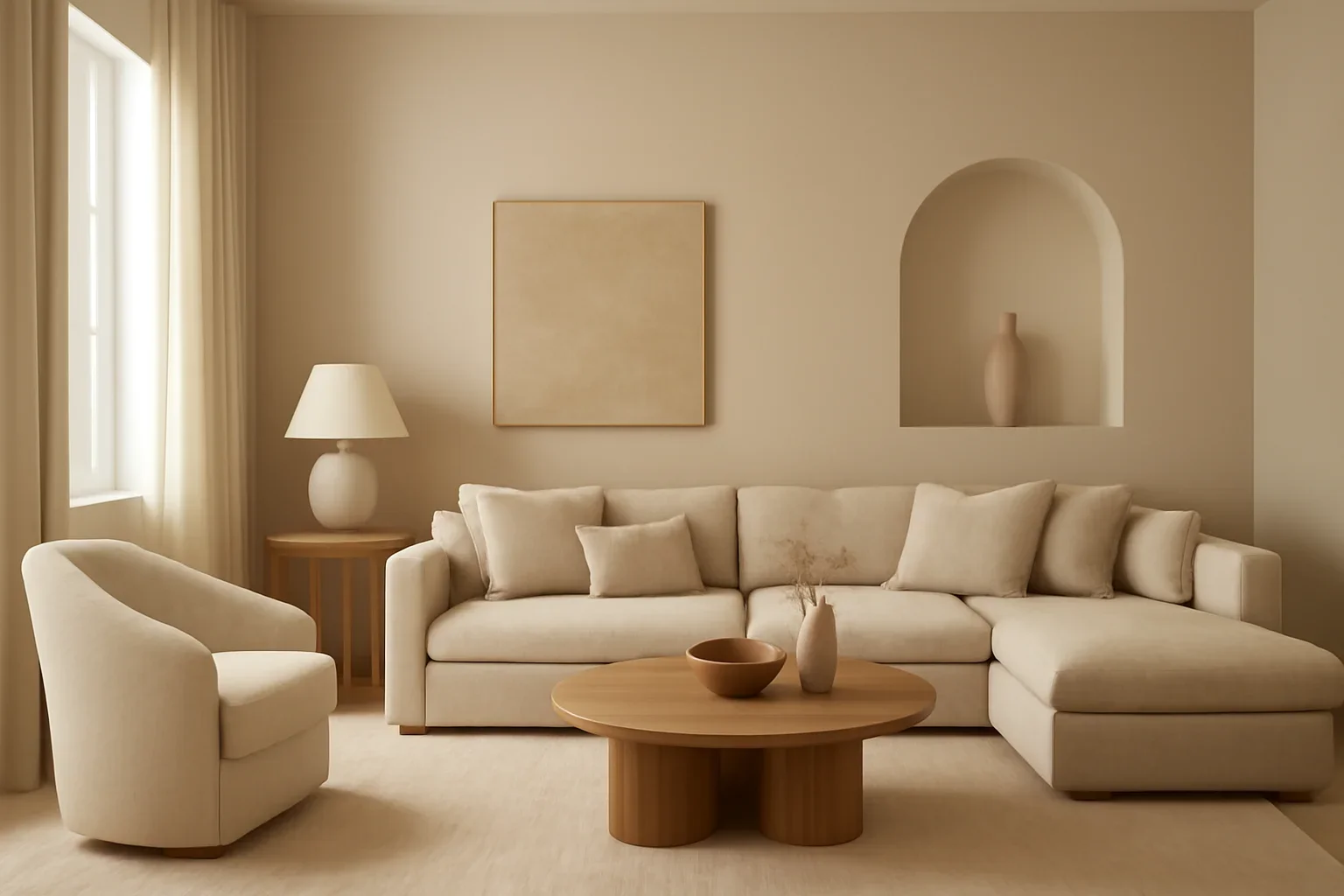
Why monochromatic rooms work
Using one color family creates a sense of continuity that is especially useful in bedrooms, living rooms, and smaller spaces. The key is to build depth through lighter and darker versions of the same hue.
- Mix pale, mid, and deep tones within the same family.
- Use texture to keep the room from feeling one-note.
- Balance matte and reflective finishes for visual movement.
Where people go wrong
The room starts to feel flat when everything lands at the same intensity level. Matching walls, upholstery, rugs, and accessories too closely removes the contrast that gives the scheme life.
- Keep one element slightly richer or softer than the others.
- Introduce natural materials for warmth.
- Let lighting create dimension across the same color family.
How to keep it livable
A monochromatic palette still needs practical restraint. If the base color is bold, use quieter supporting materials so the room stays refined instead of theatrical.
- Anchor the room with a reliable neutral.
- Use pattern sparingly so the scheme still reads as cohesive.
- Need help making the palette usable? A focused color consultation package can turn a theory into a real room plan.