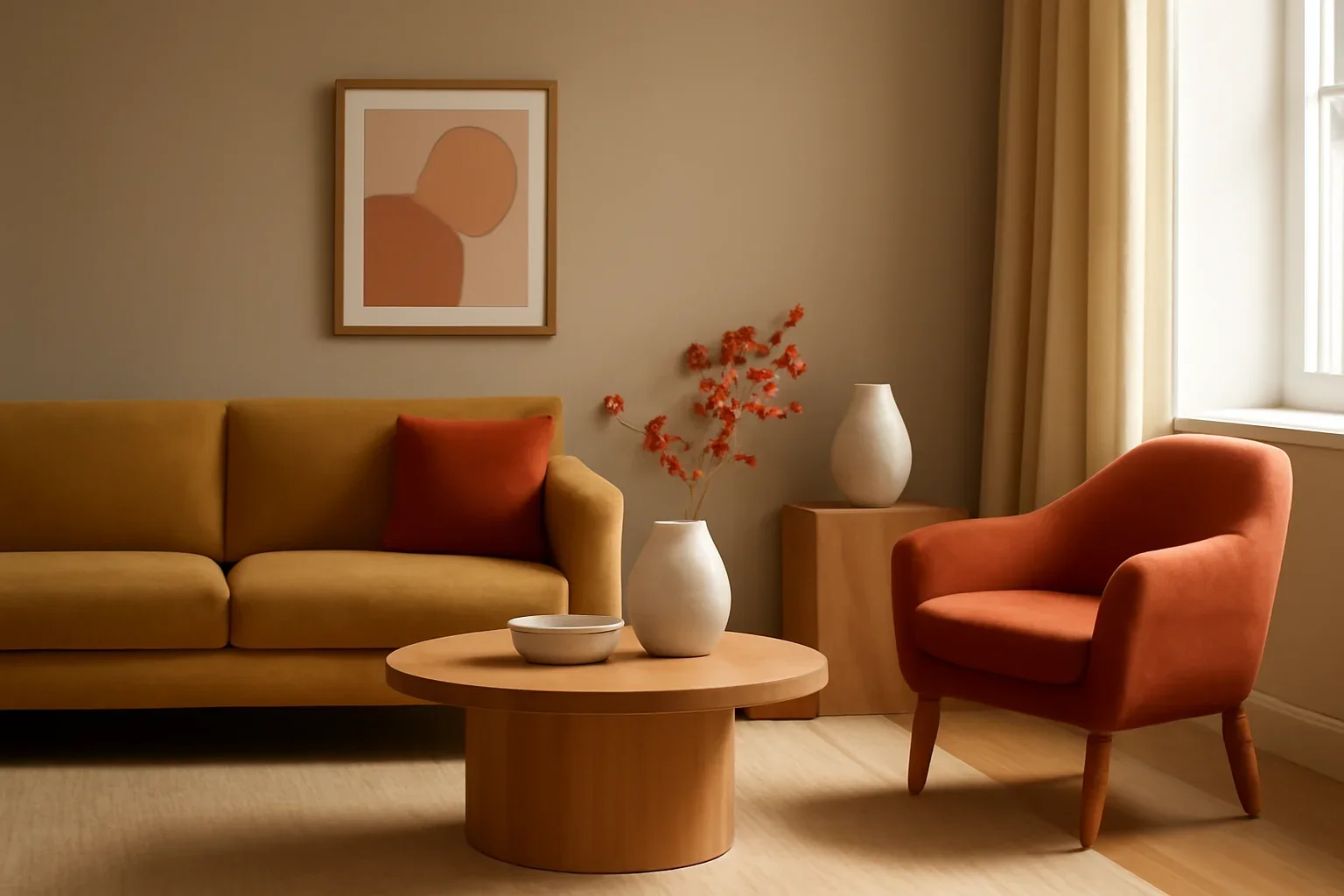
Understand the role of each color
With three or four major color families in play, each one needs a job. One can lead, another can support, and the rest can act as accents so the room keeps a clear center of gravity.
- Pick the main tone before choosing the rest.
- Use the boldest color in smaller doses if the room already has strong architecture or furnishings.
- Repeat each color intentionally rather than scattering it.
Use neutrals as a stabilizer
More complex palettes almost always need quieter surfaces to feel livable. Neutrals help the room breathe and give the stronger hues somewhere to land.
- Let walls, floors, or large upholstery pieces stay calmer.
- Bring color through art, pillows, occasional furniture, or rugs.
- Avoid putting every major hue on an equal visual footing.
Bring the scheme back to function
A colorful palette still needs to serve the room. Mood, natural light, and daily use should guide how far the contrast goes.
- Bedrooms often need more restraint than social spaces.
- Open-concept rooms need color relationships that hold up across sightlines.
- When the combinations feel harder to control, a color consultation package can simplify the process.