Build from one anchor
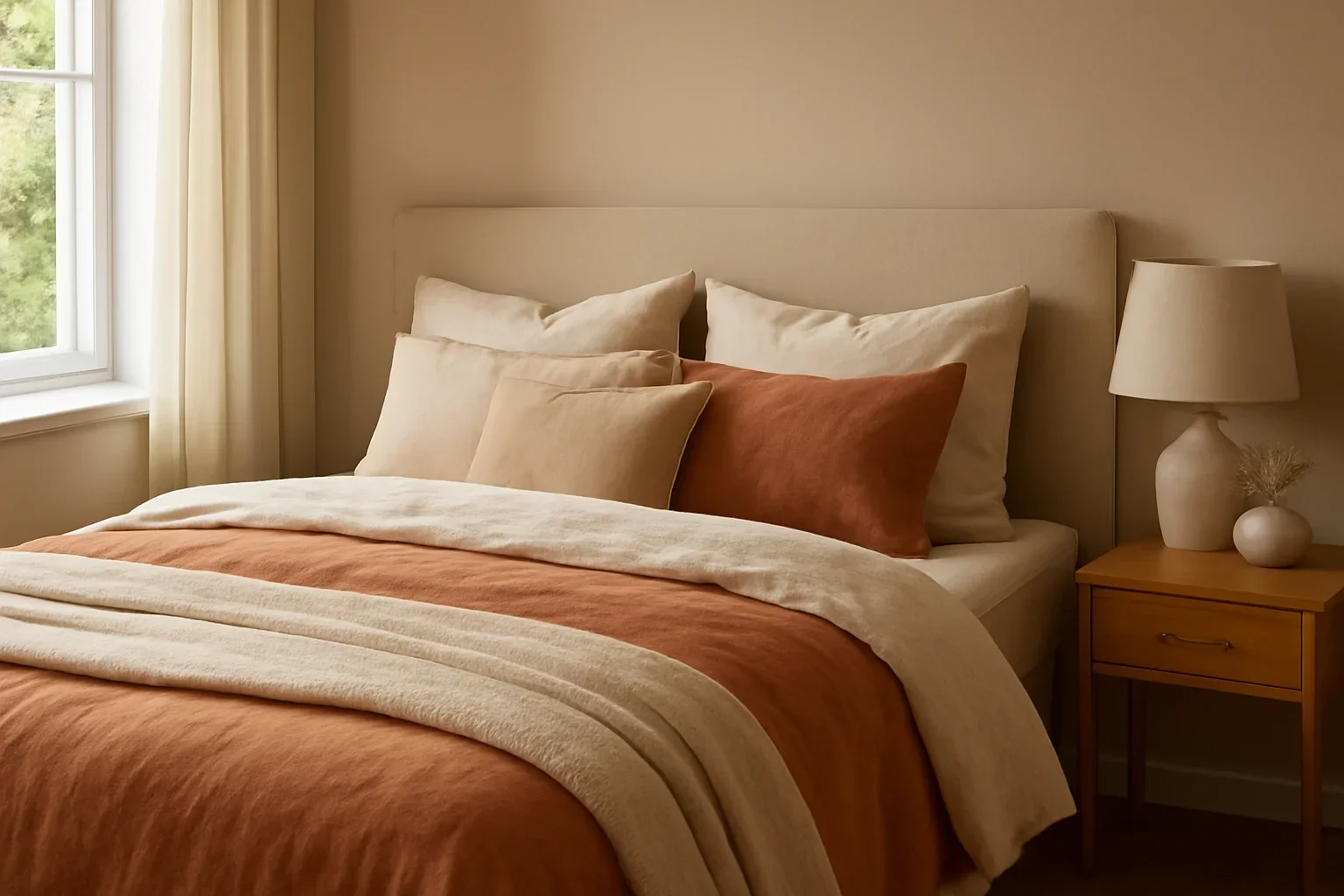
The bed looks calmer when one element leads, whether that is the duvet, a patterned lumbar pillow, or a strong coverlet tone. Everything else should support that main note.
- Use the largest textile to set the color direction.
- Add one smaller pattern if the room needs movement.
- Vary texture even when the palette stays close.
Mix tone and texture carefully
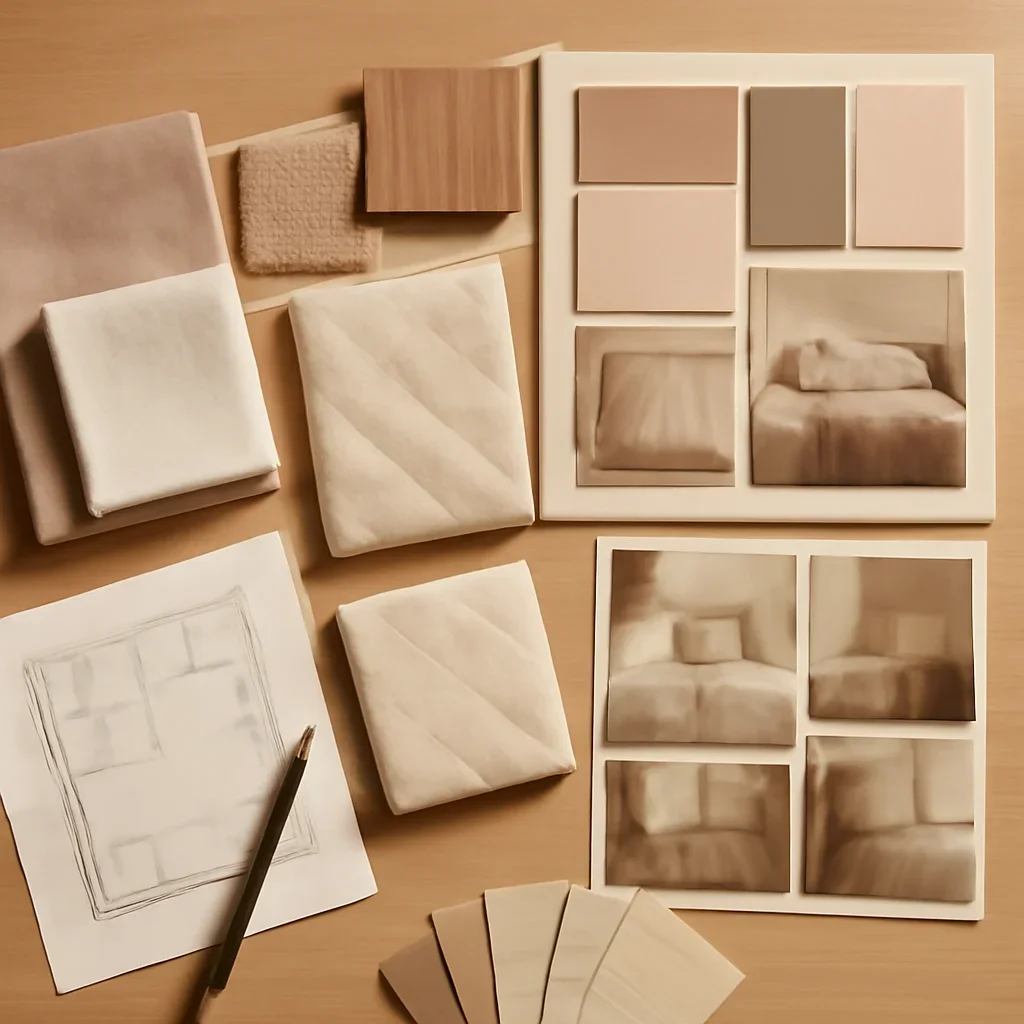
A layered bed usually includes at least two or three tonal variations so it does not look flat. Texture does just as much work as color here.
- Combine smooth cotton with quilted or woven layers.
- Use a darker accent at the base or behind the pillows for depth.
- Let neutrals give stronger colors somewhere to rest.
Make the bed relate to the room
Bedding should not feel disconnected from the rest of the bedroom. Wall color, drapery, rug tone, and wood finishes all influence what combinations feel right.
- Pull one room color into the bedding story.
- Keep the contrast softer if the room is already small.
- Need a full-room approach? bedroom interior design can coordinate the whole space.