Choose the right shade family
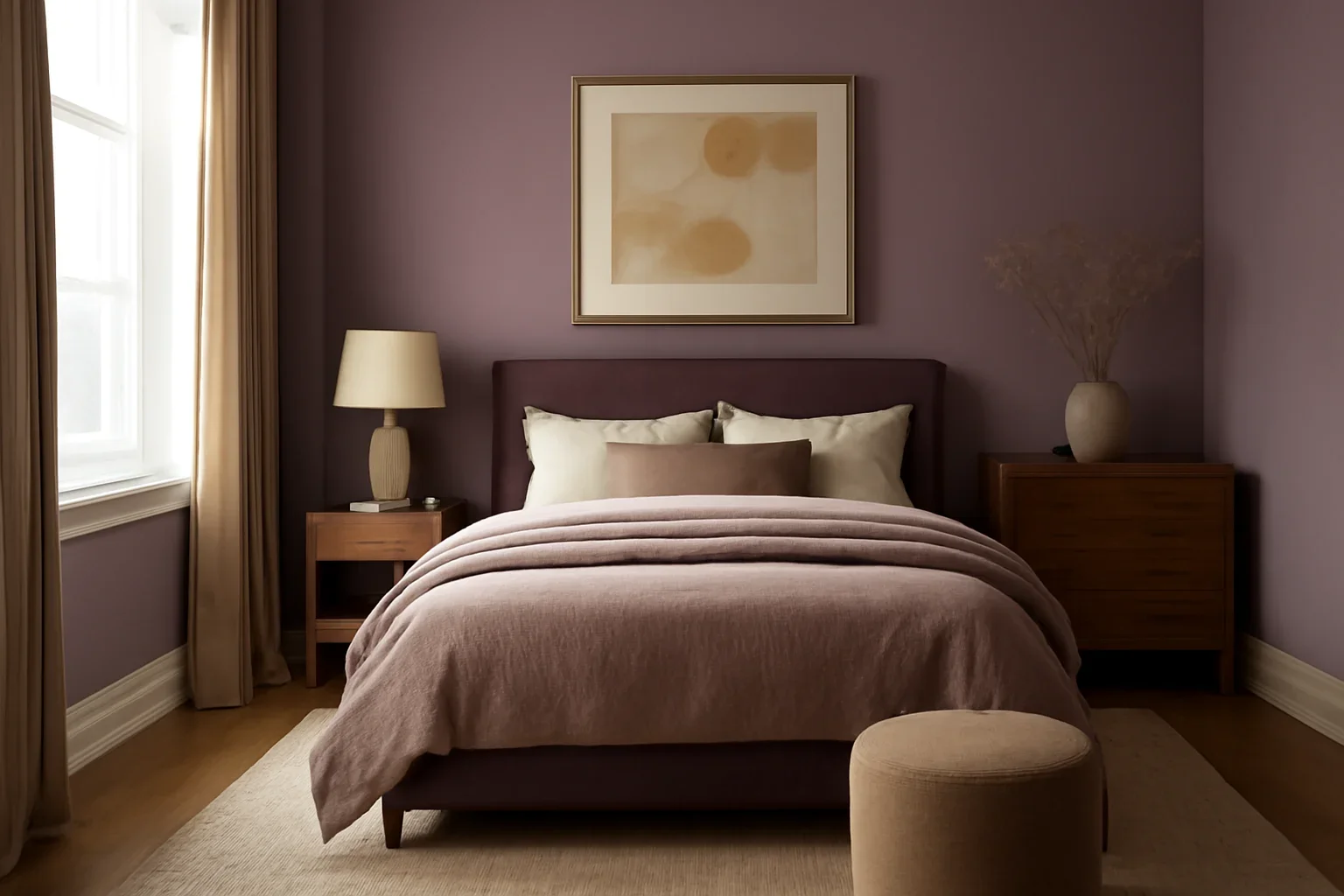
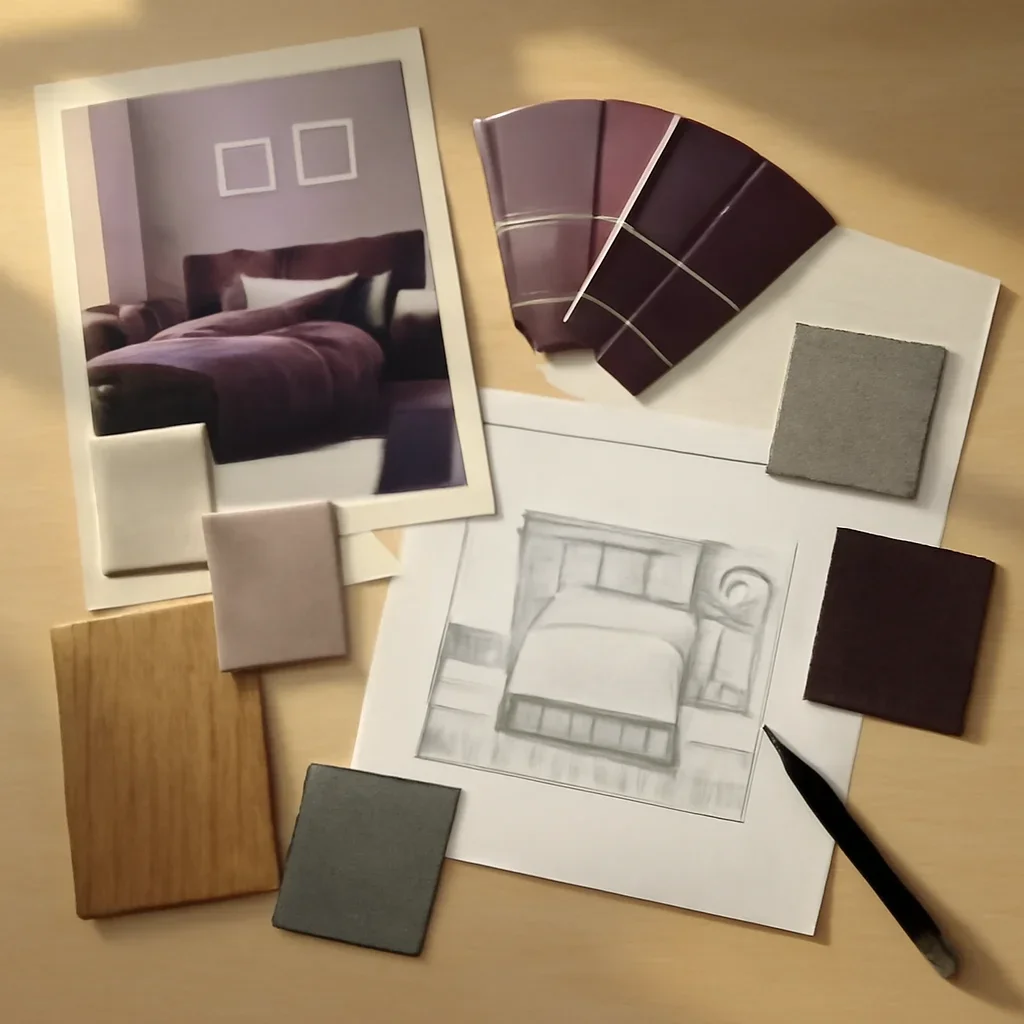
Dusty mauve, plum, heather, and gray-leaning lavender all create a more refined mood than brighter purple tones. The room feels calmer when the color has some softness built in.
- Pair purple with warm neutrals for softness.
- Use charcoal or walnut tones for depth.
- Avoid competing bright accents that make the palette feel juvenile.
Use purple as a layer, not only a wall color
You do not need to cover the entire room in purple to get the effect. Bedding, drapery, upholstery, and artwork can bring the color in more subtly.
- Start with textiles if you are unsure about painted walls.
- Let larger furniture pieces stay neutral.
- Use metallics or glass sparingly to keep the room polished.
Keep the room restful
Bedrooms need a palette that calms the nervous system rather than constantly demanding attention. Purple works best when the rest of the room supports quiet.
- Repeat the tone in two or three places, then stop.
- Use layered lighting to soften stronger shades.
- Need help balancing color and comfort? Bedroom design support can make the palette more usable.